How diabetes affects your body — from head to toe

Staying healthy when you have diabetes means more than just monitoring blood sugar. Learn how this chronic disease affects your eyes, teeth, feet, and more. Plus, what you can do to protect your health.
Diabetes is a disease that affects more than just blood sugar levels. It can affect your entire body — from your eyes and teeth to your legs and feet. That’s because high blood sugar levels, over time, can damage different parts of the body.
As a result, diabetes can make you more prone to certain conditions like high blood pressure and high cholesterol. That’s why people with diabetes are twice as likely to have heart disease or a stroke, according to the American Diabetes Association. Diabetes is also a leading cause of kidney failure.
But the good news is that properly managing blood sugar levels — and diabetes — can help prevent long-term problems. Here’s what you need to know about how diabetes affects your body — and what you can do to stay healthier, from head to toe.
Did you know an in-home health visit helps support the care you are receiving — plus, it’s part of your plan? Call 877-302-3672 877-302-3672 to schedule or book online.
Diabetes and your eyes
Diabetes-related eye conditions are the leading cause of vision impairment and blindness among adults. That’s why, if you have diabetes, you should see an eye doctor at least once a year for a comprehensive eye exam.
Common diabetes-related vision problems include:
Diabetic retinopathy. This eye condition occurs when high blood sugar levels cause tiny blood vessels in the eye to weaken and leak. This can cause blurriness, dark areas of vision, spots in your vision, and difficulty distinguishing colors.
Catching and treating diabetic retinopathy early is key to preventing vision loss. Injectable medications can help stop the growth of new blood vessels. And laser surgery can help shrink blood vessels and stop them from leaking blood and fluid.
Cataracts. High blood sugar levels can cause structural changes in the eye that can speed up the development of cataracts. This disease occurs when the eye’s naturally clear lens becomes cloudy, making vision distorted or blurry.
Surgery — a procedure that replaces your cloudy lens with a clear one — is the only way to get rid of cataracts. But eyeglasses and contact lenses may be able to help you see better in cataracts’ early stages.
Glaucoma. Healthy eyes make a clear fluid that drains slowly. But when you have glaucoma, your eyes make too much fluid too fast. That builds up pressure in your eye, damaging the optic nerve that carries signals from your eyes to your brain.
Diabetes doubles your chances of having this eye disease, which is the leading cause of blindness worldwide, according to the Centers for Disease Control and Prevention (CDC).
Treatments like eye drops, laser treatment, and surgery can help slow the progression of glaucoma, but they can’t reverse any damage that’s already occurred.
Diabetes and your heart health
Diabetes and heart disease are closely tied. In fact, having diabetes doubles your risk of heart disease, according to the National Institutes of Health (NIH).
That’s because high blood sugar can harm the nerves and blood vessels that control your heart. People with diabetes are also more likely to have other risk factors such as high blood pressure and high cholesterol.
The good news is that many of the lifestyle steps you take to keep your blood sugar in line — like eating healthy foods and getting regular exercise — can also help protect your heart health.
The symptoms of heart disease are often nonexistent, which means you might not notice anything’s wrong until a serious problem comes up.
The best things you can do to help your heart are:
- Keep up with regular checkups.
- Follow your diabetes care plan.
- Ask your doctor to check your blood pressure and cholesterol levels.
- Get the recommended 150 minutes of moderate-intensity exercise each week.
- Eat a balanced diet.
Recommended reading: Why you need both an in-home checkup and an annual wellness visit
Diabetes and your mental health
People with diabetes are 2 to 3 times more likely to have depression. Anxiety is also common.
If you’re experiencing any of these symptoms, be sure to discuss them with your health care provider:
- Restlessness or irritability
- Difficulty concentrating
- Muscle tension
- Problems with sleep
- Persistent fatigue
You can also talk with a licensed health care provider — in the comfort of your own home — about mental health symptoms you’re experiencing. It’s part of a complete health and wellness assessment you’ll get, at no cost to you. To book an appointment, call 877-302-3672877-302-3672.
Know that if you do get a depression diagnosis, there are plenty of things you can do to start feeling better. Therapy and medication can help, as can joining a support group.
Diabetes and your teeth
Taking good care of your teeth is even more important when you have diabetes. That’s because high blood sugar levels can weaken your immune system — your body’s first line of defense against infections in your mouth.
High blood sugar can also affect the amount of saliva that your mouth produces. This can cause dry mouth — and bad breath. But because saliva helps to control bacteria in the mouth, a lack of it can trigger cavities, tooth decay, gum disease, and infections.
That’s why it’s important to see your dentist for once- (or twice-) yearly cleanings, X-rays, and checkups. Twice-daily brushing and regular flossing is critical too when you have diabetes. Chewing on sugar-free gum may also help to boost saliva production and alleviate the symptoms of a dry mouth.

Are you as healthy as you think you are?
Your no-cost in-home health assessment can bring peace of mind.
Diabetes and your kidneys
Diabetes and kidney troubles are closely linked. About 33% of people with diabetes also have kidney disease, according to the CDC. And most kidney disease is caused by diabetes.
That’s because high blood sugar can damage the blood vessels in your kidneys — a condition known as diabetic nephropathy.
Because kidney disease is symptomless in its early stages, early testing is key. Talk to your health care provider about getting screened for chronic kidney disease. You may also be able to get screened during an in-home health visit with a licensed health care provider. (To book your no-cost in-home visit, call 877-302-3672877-302-3672.)
Untreated diabetic kidney disease can cause the kidneys to stop working properly. But when caught early enough, you can reduce complications and slow the progression of the disease. Early-stage treatments include medications and dietary changes.
Diabetes and your feet
High blood sugar levels in the body, over an extended period, can damage the nerves throughout the body, including in the feet. This is referred to as diabetic neuropathy, and about half of all people with diabetes experience it.
This condition causes pain and tingling — and may even cause you to lose feeling — in your feet. For example, you may not notice a pebble in your shoe or a blister on your toe.
High blood sugar levels can also damage the linings of blood vessels in the body, causing them to narrow and harden. This results in poor circulation.
Poor circulation can cause the feet (and hands) to feel cold, and it can also dry out the skin, making it more prone to cracking. That’s why people with diabetes are more prone to ulcers, or open sores, on their feet, which can then become infected. Poor circulation can also cause delayed wound healing.
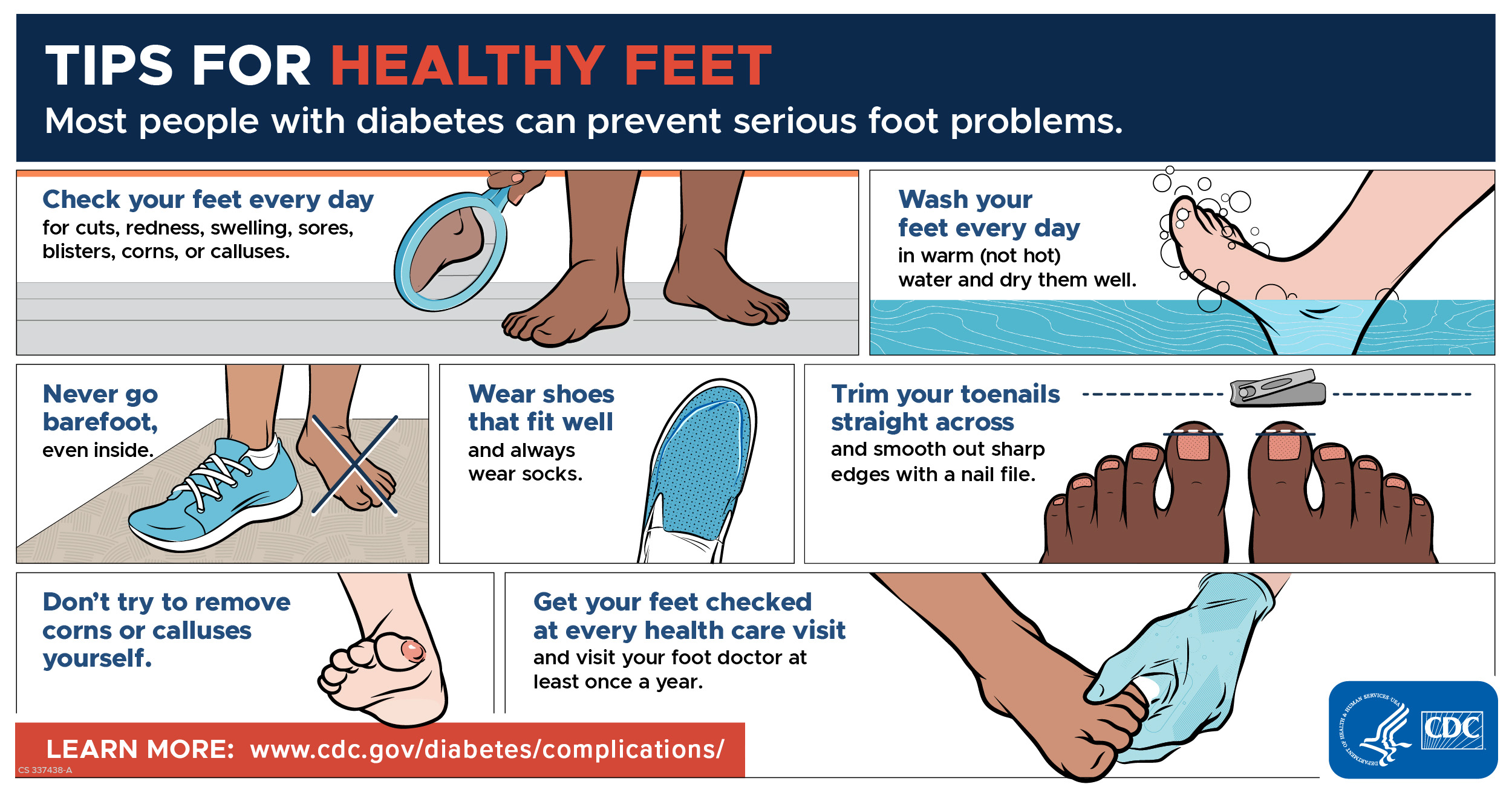
But foot problems can be prevented with these strategies:
- Manage your blood glucose levels. This will help prevent damage to your nerves and blood vessels.
- Check your feet daily for cuts, sores, blisters, or swelling. Call a podiatrist if you notice anything unusual with your feet.
- Wash your feet daily with warm, soapy water. Then dry them carefully, including between your toes. This will help prevent infections from developing.
- Keep your feet soft with lotion. But avoid putting cream between your toes. Moisture in this area can cause bacterial or fungal infections.
- Wear moisture-wicking socks and shoes that fit well. Avoid going barefoot, even inside your home, to prevent injury.
- Visit a podiatrist yearly. These foot specialists can catch problems early on — and treat them — before they become more serious.
Managing blood sugar levels is key to preventing so many of these problems. But monitoring your entire body is important too, as you’ll be able to detect issues early on before they become bigger problems.
Sources:
Cardiovascular disease: American Diabetes Association
Prevent diabetes complications: Centers for Disease Control and Prevention
Diabetes and mental health: Centers for Disease Control and Prevention
The facts, stats, and impacts of diabetes: Centers for Disease Control and Prevention
Diabetes and vision loss: Centers for Disease Control and Prevention
Diabetic eye disease: National Institute of Diabetes and Digestive and Kidney Diseases
Don’t let glaucoma steal your sight: Centers for Disease Control and Prevention
Diabetes and oral health: Centers for Disease Control and Prevention
Diabetic kidney disease: National Institute of Diabetes and Digestive and Kidney Diseases
Diabetes and chronic kidney disease: Centers for Disease Control and Prevention
Diabetes and nerve damage: Centers for Disease Control and Prevention
Diabetes and healthy feet: Centers for Disease Control and Prevention