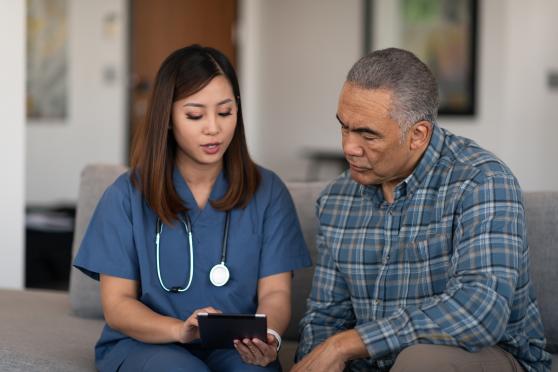
7 reasons to say yes to in-home health visits, today
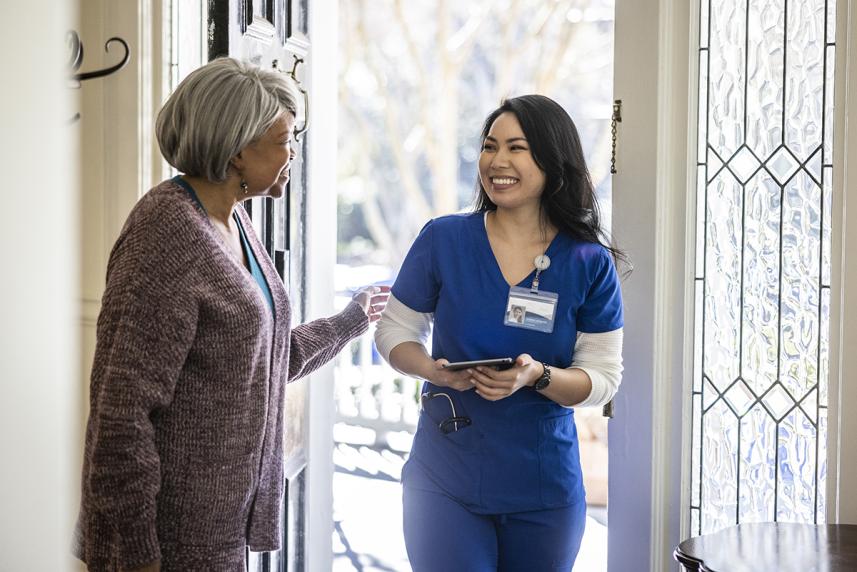
Did you know you can get free in-home health checkups in addition to seeing your doctor in person? Here’s how your health can stay on track with these yearly appointments.
Seeing your primary care provider on a yearly basis is important for your well-being. They can diagnose health conditions, address medical concerns, and make sure you’ve got doable and effective treatment plans to follow.
But even with this annual wellness visit, you may not be receiving all the care you need to stay healthy and strong now — and for years to come. That’s where in-home visits come in, especially if you’re over the age of 65. As the name implies, these are appointments where the health professional comes to you or meets with you over a video call.
“As a clinical social worker, I’ve done home visits a lot for older clients, and they’re invaluable,” says Jennifer L. FitzPatrick, MSW. She’s the founder of Jenerations Health Education, in Baltimore, and a former gerontology instructor at Johns Hopkins University’s Certificate on Aging program. “You can see how a person truly lives, which provides insights into their health.”
And what’s even better: These visits are typically free to you. Your health insurance may cover the cost of an in-home health visit, especially if you have a Medicare Advantage plan.
7 advantages of in-home health visits
There are many reasons to book an in-home visit with a health care provider today. These include:
1. You get a mini physical.
During an in-home visit, a clinician can check your heart rate and blood pressure, in addition to your height and weight. They may also do a urine test to check for protein or blood, which could indicate more serious health issues like a urinary tract or kidney infection.
2. You get more time to talk about your overall health.
The average doctor’s visit lasts about 18 minutes, which doesn’t give you a lot of time to talk about your medical concerns and needs. But some in-home health visits last about an hour. That’s a lot of valuable time with a health care provider.
During an in-home visit, a clinician will review your medical history and your family history. They’ll also offer you personalized health advice. This could include nutrition and exercise counseling. What’s more, they can also recommend any preventive screenings you may be due for, such as a mammogram or a colonoscopy.
3. You can have someone help assess your cognitive abilities.
If you’ve been forgetful lately or have had difficulty learning new things — and haven’t wanted to share this with anyone — an in-home visit can offer the perfect one-on-one opportunity.
During an in-home visit, you’ll have time to discuss your cognitive concerns with a caring and empathetic clinician. They’ll be able to talk with you about the signs of dementia — and help connect you with available support resources.

An even healthier you starts here
Your no-cost in-home health visit helps you stay a step ahead of diabetes, kidney problems and more.
4. You get an in-home risk assessment.
More than 1 in 4 older people fall each year, but less than half tell their doctor. Yet these falls can cause a serious injury, such as a hip fracture, that could land you in the hospital or even in a nursing home.
As we get older, our eyesight worsens, as does our ability to walk steadily, notes FitzPatrick. “It’s good to have a fresh pair of eyes at your home, to look for hidden hazards,” she adds. Your in-home health care provider can help spot dangerous throw rugs or uneven stairs, for example, both of which could increase your risk of falling. Then your provider can discuss solutions with you to help keep you safe.
5. You get a medication check.
Many older adults take multiple medications. Yet, among older adults taking at least two prescription medications, just 1 in 4 had had a comprehensive mediation review, according to a University of Michigan poll.
Your in-home health care professional can examine all your medication bottles to be sure you have enough of each medicine. They can also help assess whether there’s any medication you may no longer need, as well as whether you’re at risk of any interactions.
“Sometimes, a patient will only have 10 puffs left on their inhaler to manage their asthma. And it turns out that they have limited transportation, so they can’t easily get to their pharmacy for a refill,” explains FitzPatrick. Your in-home provider can make note of this and find ways to help get you the medications you need.
6. You can find out if you’re caught up on all your vaccinations.
At your in-home health visit, the health care professional will review your vaccine status. This includes COVID-19, flu, pneumonia, shingles, and hepatitis B vaccines. If you’re not, the clinician will make a note on the health care assessment so your PCP can follow up with you to get you caught up.
7. You get to do the visit from the comfort of your own home.
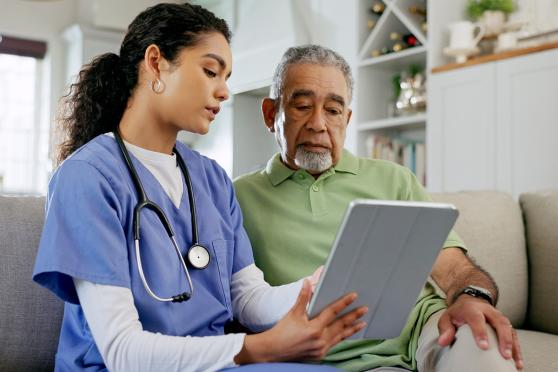
An in-home health visit can be completed while sitting at your kitchen table or in the living room. You can even meet with a clinician over an online video call, if that’s easier for you. Whether you choose an in-home or a virtual visit, you may be more relaxed and be better able to focus on whatever health-related questions or concerns you have, compared to office visits.
Both annual wellness visits at your doctor’s office and in-home health visits — while different — play an important role in managing your overall health. In-home visits are a good way for you and your in-home provider to create a personalized plan that will keep you healthy for the long term. Be sure to book your in-home visit today.
See our sources:
Older adults and physical activity: Centers for Disease Control and Prevention
Life-changing benefits of exercise after 60: National Council on Aging
Step up your walking workouts: Harvard Health Publishing
Wearable weights: Harvard Health Publishing