
Why you need both an in-home checkup and an annual wellness visit
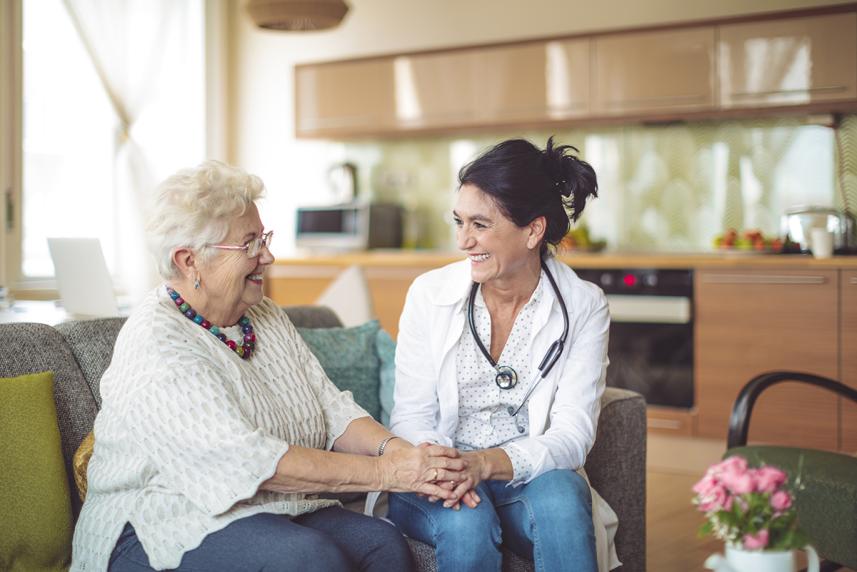
Both appointments are unique — and important — and can help you stay healthy throughout the year. Here’s what you need to know.
Some things never change: An ounce of prevention is still worth a pound of cure. That makes your annual appointments with your primary care provider super important. They’re key to staying healthy, strong, and independent.
A study in the Journal of the American Medical Association found that yearly checkups — or annual wellness visits (AWV) — are a good way for your provider to find (and treat) chronic conditions such as high blood pressure and depression. They’re also an opportunity to check problems like high cholesterol — and to determine whether you’re due for potentially lifesaving screenings such as colonoscopies and mammograms.
What’s more, people who get their annual checkups tend to have a healthier diet and get more exercise. And most important of all, these yearly visits help you develop a good working relationship with your primary care provider. That really counts if you’ve got a chronic condition such as diabetes or asthma.
But now that you’re 65-plus, you can rev up your preventive health routine with two free health visits: your AWV and a midyear in-home visit. Both offer good opportunities to sit down with a health care provider to create a personalized prevention plan that helps you stay healthy and avoid injuries, illnesses, and diseases. Plus, they’re a chance to talk about issues such as depression and memory loss, according to the National Council on Aging.
Here’s everything you need to know about annual wellness visits and in-home visits — and why making time for both is important for your overall health.

Don’t miss your chance to book your no-cost in-home visit
We’ll bring the clinician to you!
Your annual wellness visit
Think of your AWV as an annual check-in with your doctor. At this appointment, you and your provider will develop a personalized prevention plan tailored just for you. It’s also free to everyone enrolled in Medicare.
A study published in the Journal of Primary Care & Community Health found that 88% of those who got their annual wellness visit also kept up with their preventive screenings. But only 63% of those who skipped their AWV maintained their screenings.
“It’s a time to set your health goals for the year and create your own personalized health plan,” says Sharon Brangman, MD, chair of the department of geriatrics at the SUNY Upstate Medical Center in Syracuse. “You can make sure you’re up to date on all your immunizations and medications. And you can review your advance directives and get a memory test.”
The AWV has also boosted rates of older adults getting their flu shots: According to a study published in Vaccine, 64% of those who’d had an AWV were vaccinated against the flu, compared with only 44% of people who hadn’t had an annual wellness visit.
What to expect at your annual wellness visit
First, you’ll complete a questionnaire called a health risk assessment. Then, according to the U.S. Department of Health and Human Services, you can expect the provider to:
- Review your health risk assessment with you
- Measure your height, weight, and blood pressure
- Talk to you about your health history
- Discuss all your medications (including vitamins and supplements) and ask about any specialists you see
- Look for any signs of memory loss or problems with thinking
- Talk about risk factors for substance use disorders
- Give you a short written plan to take home, including a list of screening tests you’ll need over the next few years
Your in-home visit
Think of an in-home visit as a midyear check-in. By scheduling this appointment at the halfway point between annual wellness visits, you can stay ahead of any health problems that may come up. (Haven’t scheduled yours yet? Get started.)
The best part about an in-home visit, however, is that you don’t have to go anywhere. A health care provider comes to you. You can expect one-on-one time with that person for up to 60 minutes, which means you’ll have plenty of time to ask questions.
What to expect at your in-home visit
An in-home health visit may offer screenings and tests that are similar to what you would receive at your AWV appointment. In fact, these visits can be a good way to help catch you up on any that you might have missed. But the in-home appointment will also address more personal care and mental health–related issues than an annual wellness visit does.
At your in-home health visit, the clinician may include:
- A diabetes screening, where the provider will draw blood from your fingertip and use it to test your blood sugar levels
- A monofilament test to check your feet for loss of sensation, which can be caused by diabetes
- A circulation screening, so you can know how well your blood is circulating in your body
- A home safety screening, where your provider will review your home with you and suggest ways to address any fall risks that are uncovered
- A mental health conversation, where you can discuss any mood fluctuations you may be having
The extra information that the provider gets during this visit is vital to making sure you’re living your best life.
“An in-home visit gives us a different perspective on a person, compared to when they come into the office,” says Dr. Brangman. “It’s helpful to see someone in their own home because you can visualize things like safety issues. Just getting that little view of somebody in their home is so important.”
The bottom line: An annual wellness visit and an in-home visit are two different things. But both are important, so for the best results, get them both on your calendar every single year. That way you can stay up to date on both your physical and mental health.
“The goal is to help you have the highest quality of life and maintain your independence for as long as possible,” says Dr. Brangman. “And the best way to do that is to have an idea of any health issues that may be on the horizon, so you can prevent them.”
Sources:
General health checks in adult primary care: Journal of the American Medical Association
What to know about AWVs: National Council on Aging
Study about the effectiveness of AWVs: Journal of Primary Care & Community Health
Study about driving immunization through AWVs: Vaccine
General info about Medicare AWVs: U.S. Department of Health and Human Services