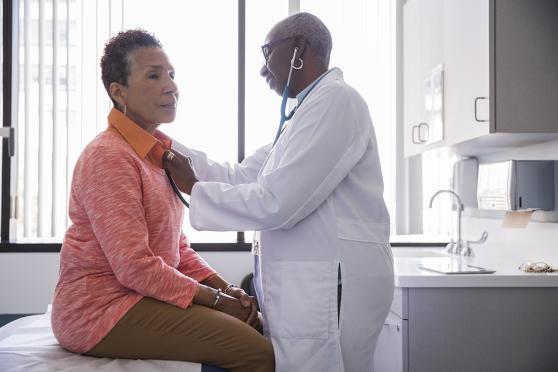
The most important health screenings for older adults

These health tests help detect some of the biggest health risks that seniors face.
The information in this article is for educational purposes only and is not intended to replace medical advice from your doctor.
If there were simple health tests that could save your life, would you take them? The answer to that question should always be yes. Yet most Americans aren’t getting preventive screenings that can catch the presence of diseases like cancer and diabetes when it may be early enough to treat them successfully.
Research shows that as few as 5% percent of adults take advantage of screenings, according to information from the U.S. Department of Health and Human Services. And they can make a huge difference to your future health. The Centers for Disease Control and Prevention (CDC), for example, estimates that increased screening for breast cancer and colorectal cancer could save nearly 40,000 lives.
You don’t even have to go to a doctor’s office for many of these screenings anymore. While some tests must be done at a doctor’s office or an imaging facility, many others can be done from the comfort of your own home.
Your Humana plan, for example, includes a yearly Health and Well-being Assessment at no additional cost. That’s when a licensed Matrix Medical Network clinician comes to your home for a 45- to 60-minute wellness exam. This visit may include screenings for conditions such as diabetes, depression, cancer, and more.
The clinician can also tell you which screenings you may want to discuss with your doctor, including a mammogram and colonoscopy.
“The goal is to prevent medical problems from happening,” says Mary Nunziata, NP, a nurse practitioner with Matrix Medical Network in Cumming, Georgia.
Curious to know which health screenings you should be getting? Talk to your doctor about these five routine health tests that can help identify the early signs of serious diseases or health risks.
Have questions about your health? A Health and Well-being Assessment is a great time to get answers from a licensed clinician — plus, it’s part of your plan. Call Matrix Medical Network at 855-204-1752 855-204-1752 (TTY: 711) or schedule online. (Weekdays: 8 a.m. to 11 p.m. ET; Saturday: 9 a.m. to 5 p.m. ET)
1. Colorectal cancer screening
Colorectal cancer is one of the leading causes of cancer-related deaths in both men and women, according to the American Cancer Society. Early screenings — which can spot abnormal polyps before they become cancerous — have been saving lives for decades. Despite this good news, 1 in 4 Americans still aren’t up to date on their colorectal cancer screenings, according to the CDC.
The tests: There are two types of screenings for colorectal cancer: visual and stool. The gold standard of visual tests, a colonoscopy, must be performed by a doctor in a medical facility. They will examine the colon and rectum for colorectal polyps or abnormal growths, using a thin tube with a camera attached to it.
The other is a stool sample test, which your Matrix clinician can help you with. They will provide you with a test kit when they come to your home for an in-home health assessment. You’ll collect stool samples and mail them to a lab, where they will be analyzed for hidden blood or abnormal cells that can be signs of polyps or cancer.
How often you should have it: Depending on your age and personal medical history, stool sample tests are recommended once a year; colonoscopy once every 10 years, according to the U.S. Food and Drug Administration (FDA).
2. Fall risk assessment
Falls are the leading cause of injury deaths in adults ages 65 and older in the United States, according to the CDC. Every year, the CDC notes, more than 1 in 4 older adults will take a tumble.
The tests: To find out if you’re at risk of a fall, your Matrix clinician can perform a few assessments that are from the CDC’s STEADI–Older Adult Fall Prevention Program. Those can include:
- Timed Up-and-Go (TUG): Starting in a seated position on a chair, you’ll stand up and walk about 10 feet, turn around, and then return to the chair. If you take more than 12 seconds to complete the test, you’re deemed to be at higher risk of falling, says Pamela Smith, NP. She is a nurse practitioner with Matrix Medical Network in South Carolina.
- 30-Second Chair Stand Test: Sitting in a chair with your arms crossed over your chest, you’ll stand up and sit down again for 30 seconds. Doing a smaller number of them means you’re at higher risk of a fall.
- 4-Stage Balance Test: You’ll stand in four different positions and hold each one for 10 seconds. If you struggle with these, you may be more likely to fall.
How often you should have it: Once a year if you’re 65 or older, per the CDC.
3. Breast cancer screening
Breast cancer is the second most common cancer in women in the United States, according to the American Cancer Society (ACS). (Skin cancer is the most common.) There is a 1 in 8 chance that a woman will develop the disease in her lifetime, states the ACS.
The good news is that for the past 30 years, deaths from breast cancer have declined by more than 40%, in part thanks to early screening, per the ACS. That helps catch the disease in its earliest and most treatable stages.
The test: Breast cancer is typically diagnosed using a mammogram, the ACS notes. That is a low dose X-ray of the breast that can find abnormal growths years before symptoms develop. Mammograms are usually done at an imaging facility.
How often you should have it: Women up to age 75 should have a mammogram every one to two years, depending on their risk factors, according to guidelines from the U.S. Preventive Services Task Force.
4. Depression screening
Nearly 30% of adults aged 60 and older may have depression, according to one recent review of studies published in the journal Psychiatry Research. This could be because many older adults are living with chronic illnesses or the loss of a partner or lifelong friends, note the study's authors.
The test: “To screen for depression, a clinician will ask you a series of questions about your mood, sleep habits, appetite, energy, attention, and stress levels”, says Smith.
How often you should have it: There’s no official recommendation for how often to be screened for depression. The screening may be part of a Health and Well-being Assessment. Talk to your primary care provider or your Matrix clinician about how frequently you should be tested. (Medicare Part B covers one depression screening per year.)

A Health and Well-being Assessment supports your regular care — at no additional cost
Click below to get started.
5. Diabetes testing
According to the CDC, an estimated 29% of adults over the age of 65 have diabetes. This is a health condition that occurs when the body doesn’t use insulin properly. That creates too much glucose (sugar) in the blood. Over time, diabetes can cause heart problems, including high blood pressure, as well as nerve damage and kidney disease, the CDC explains.
The tests: The CDC states there are several blood tests available to screen for diabetes, including:
- Rapid A1C test: During your Health and Well-being Assessment, the clinician can prick your finger to take a blood sample, then analyze the blood right away for signs of high blood sugar. An A1C test measures your average blood sugar level over a three-month period, and you can eat before taking it.
- Fasting plasma glucose test: A clinician will draw a blood sample to measure your current blood sugar levels. The test is usually given in the morning after you’ve fasted overnight.
- Oral glucose tolerance test: You’ll receive a blood test after you’ve fasted overnight. Then you’ll drink a sugary drink and have your blood tested again one, two, and possibly three hours later.
How often you should have it: Once every three years, according to guidelines from the U.S. Preventive Services Task Force, although it will need to be tested much more frequently if you have diabetes or other risk factors for diabetes.
See our sources:
Percentage of adults who take advantage of screening tests: U.S. Department of Health and Human Services
Frequency of screenings: Centers for Disease Control and Prevention
Colorectal cancer deaths: American Cancer Society
Number of people who’ve had colorectal screenings: Centers for Disease Control and Prevention
Older adult fall prevention: Centers for Disease Control and Prevention
STEADI—Older Adult Fall Prevention program: Centers for Disease Control and Prevention
Breast cancer statistics: American Cancer Society
Breast cancer screening recommendations: National Library of Medicine: MedlinePlus and U.S. Preventive Services Task Force
Prevalence of depression in older adults: Psychiatry Research
Diabetes statistics: Centers for Disease Control and Prevention
Diabetes basics: Centers for Disease Control and Prevention
A1C test for prediabetes and diabetes: Centers for Disease Control and Prevention
Diabetes testing: Centers for Disease Control and Prevention
Diabetes screening guidelines: U.S. Preventive Services Task Force
Cited sources were last reviewed on 6/17/2025
Y0040_GHHMPF5EN_C